
How it is made
From raw materials to a finished block
Full technology →Eight steps of our process. The foam is made in batches, in a mould, with low-pressure mixing - the ratio of components in step two decides everything later measured on the certificate.
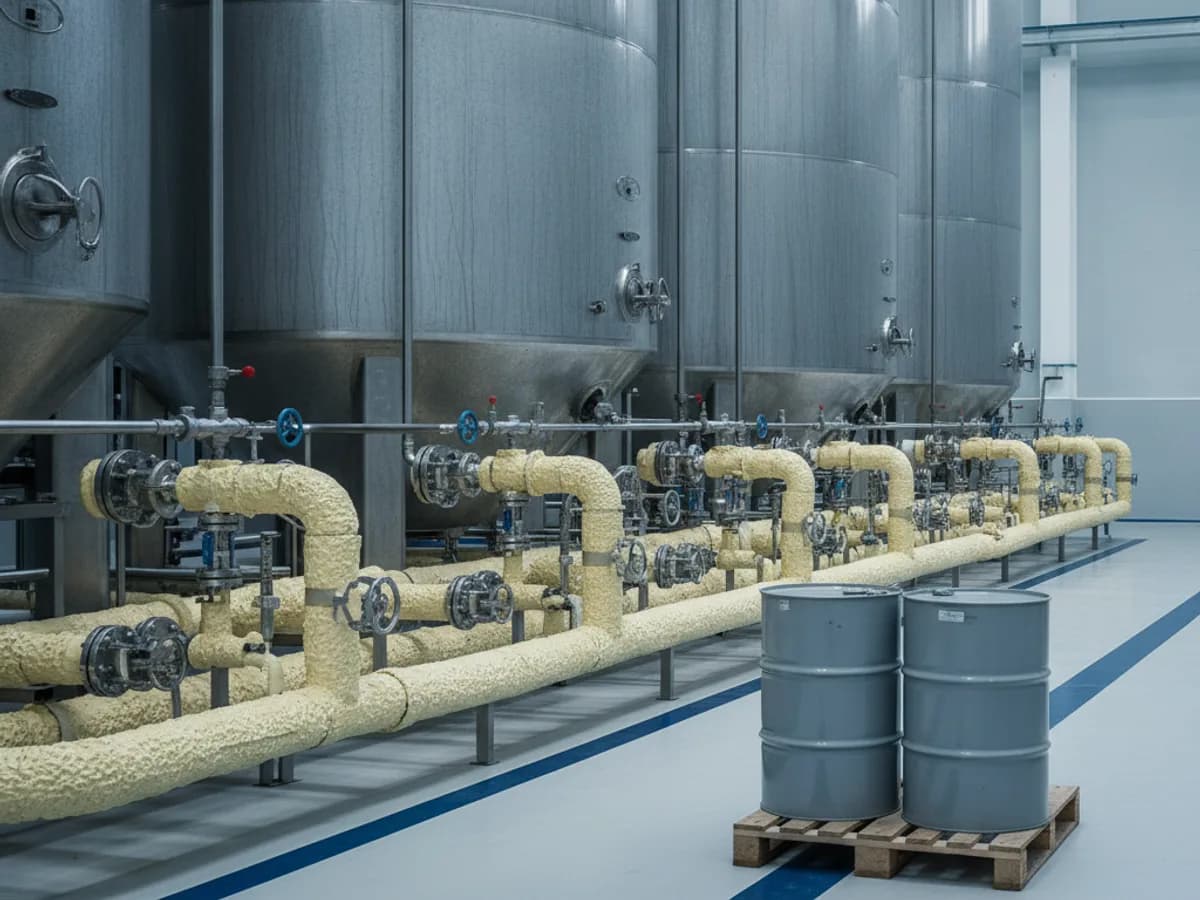
Raw materials
Intake and storage of raw materials: polyol, isocyanate (TDI), additives, catalysts and blowing agents.
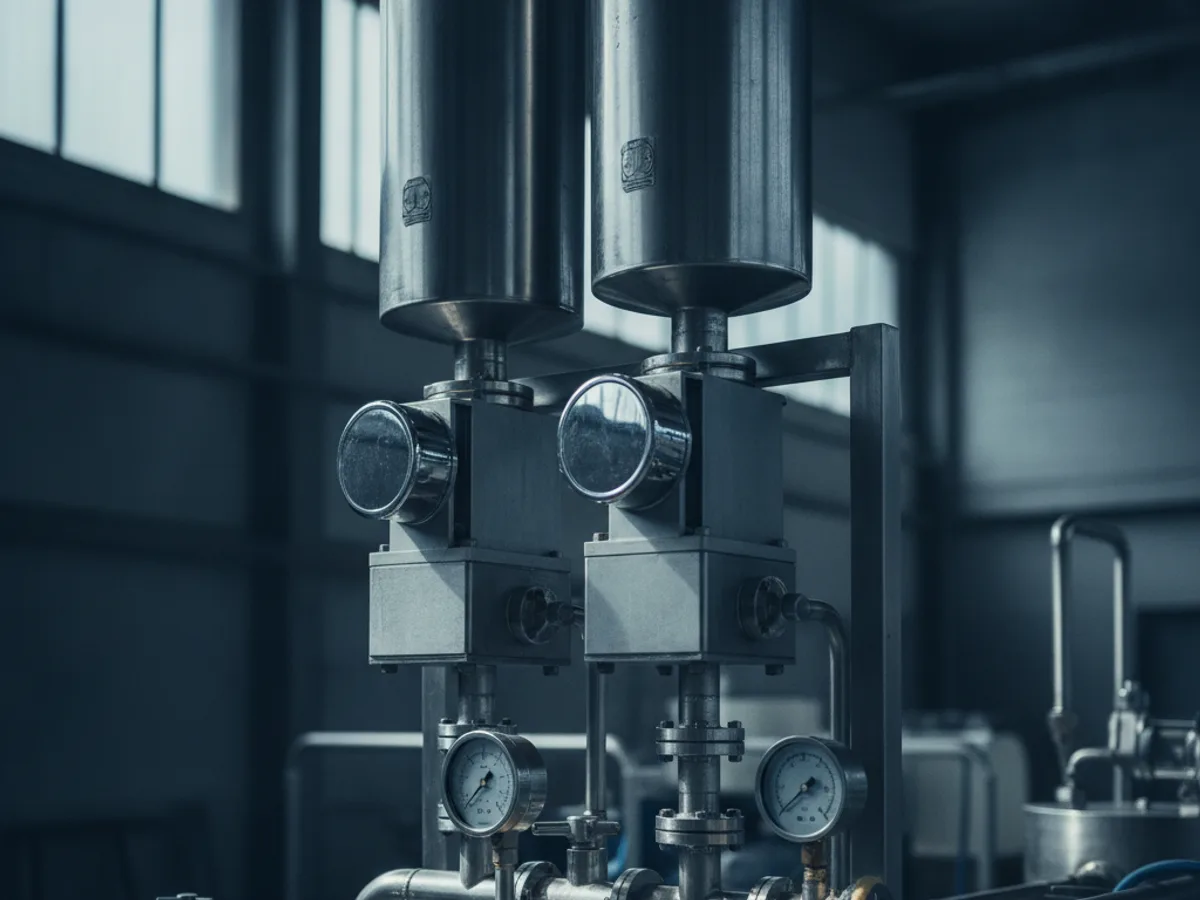
Dosing
Precise dosing to the formulation - the ratio of components determines the block's density and hardness.
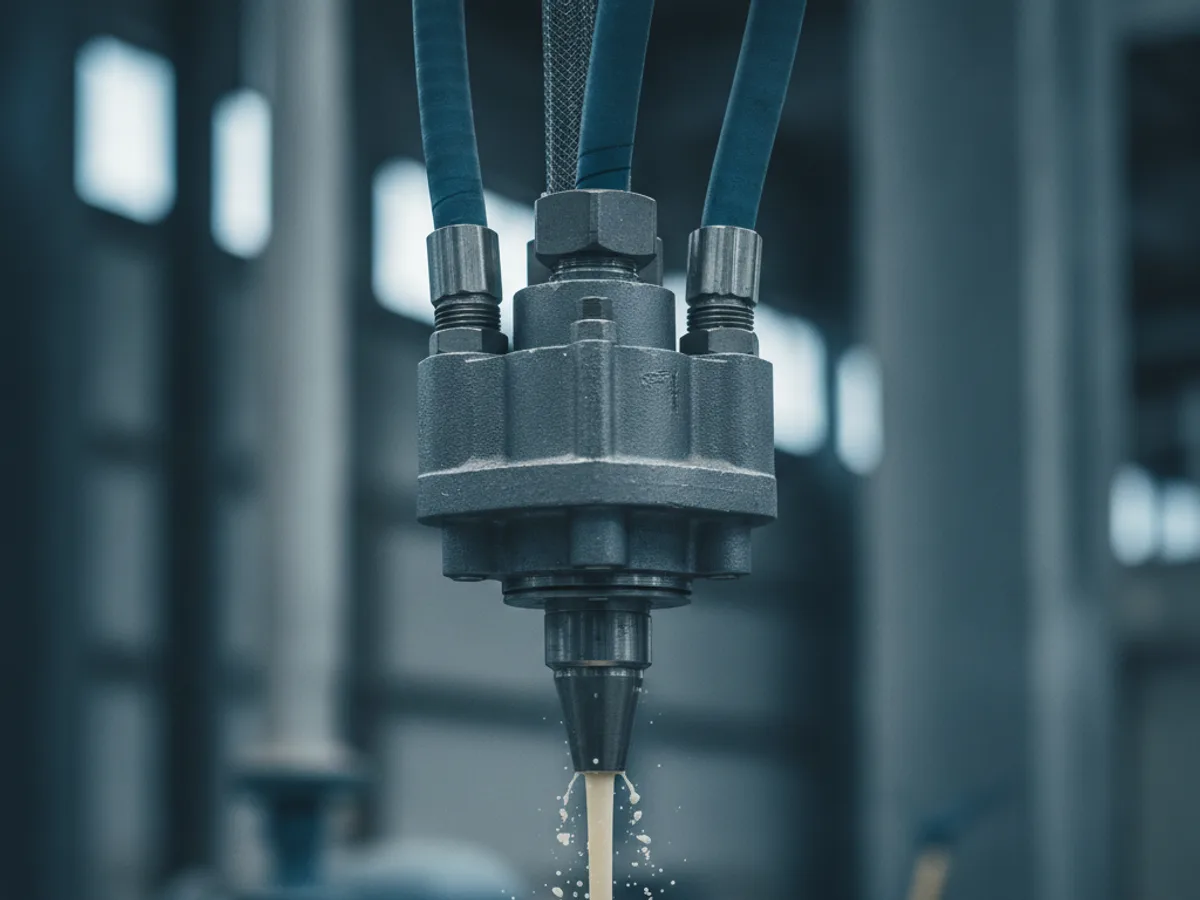
Mixing
Polyol, TDI and additives combine in the mixing head - by a low-pressure process.
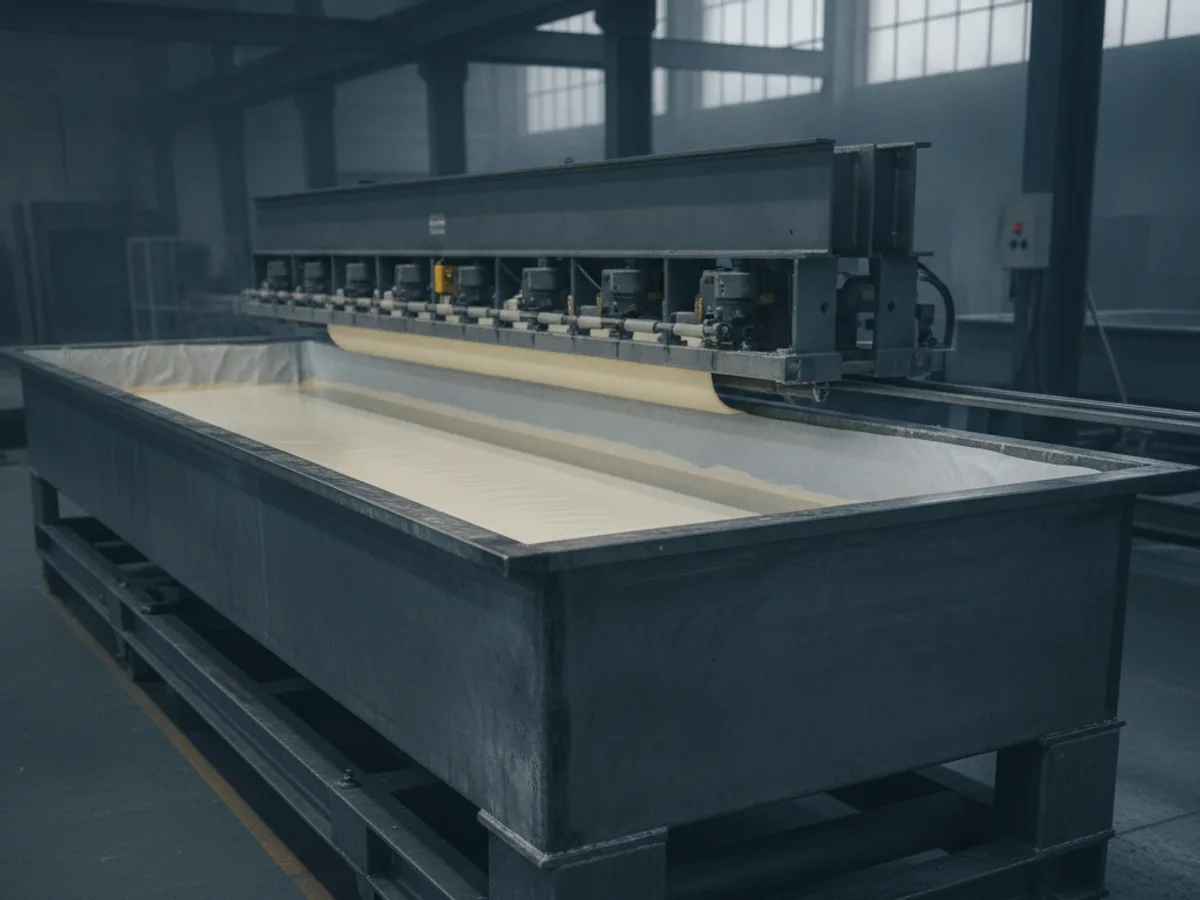
Mould filling
The mix enters the mould (box) and the reaction begins - the foam starts to rise.
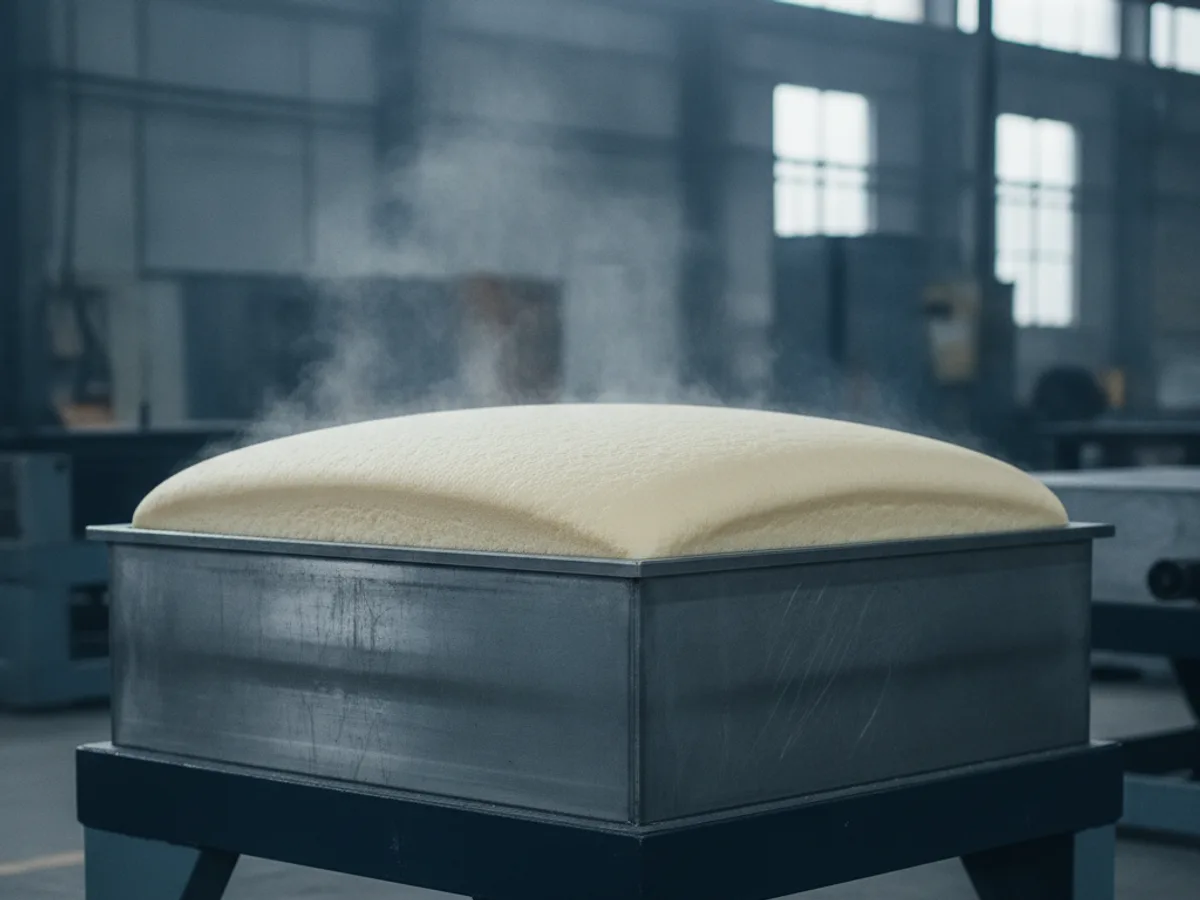
Expansion and curing
The exothermic reaction raises the foam to the top of the mould and it cures - this is where the cell structure forms.
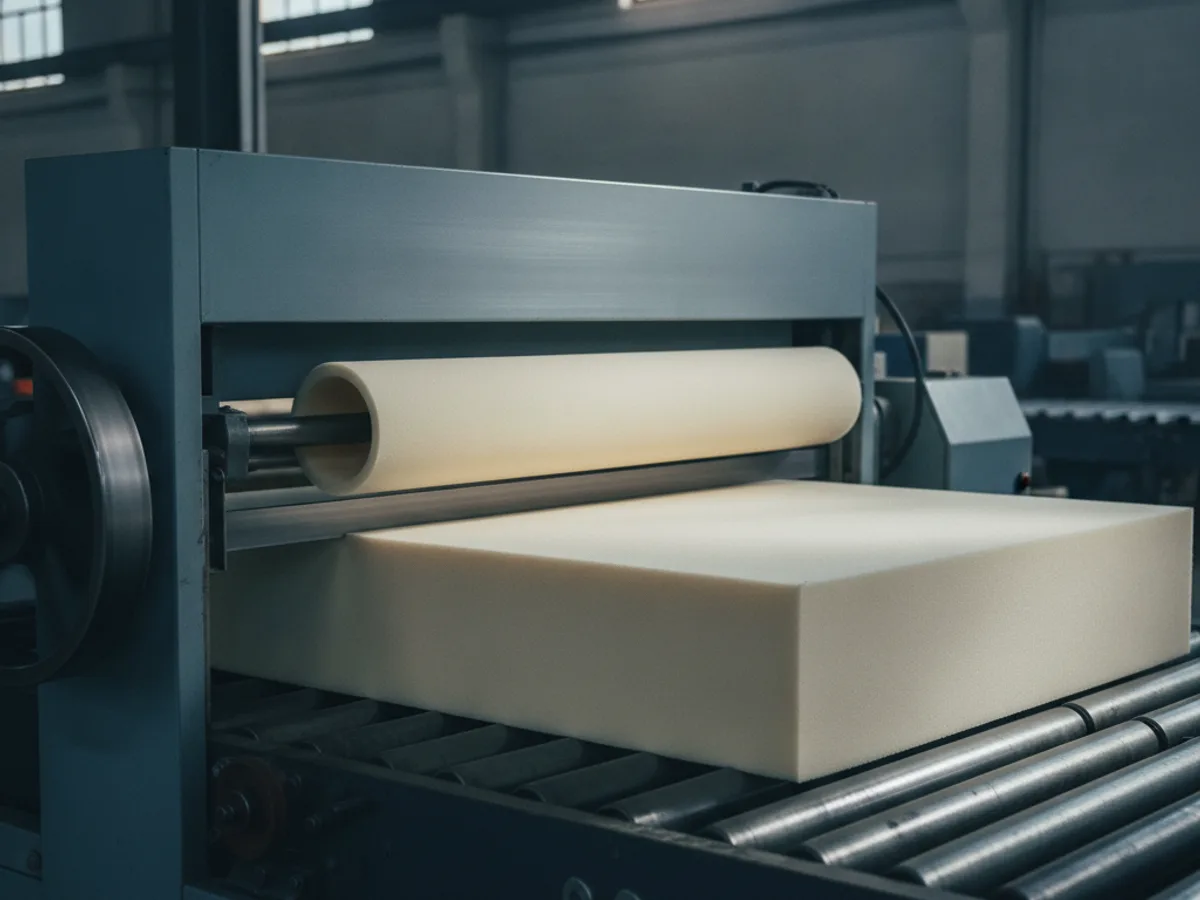
Cutting and shaping
The block is cut to the required dimensions and shaped - horizontally, vertically or to contour.
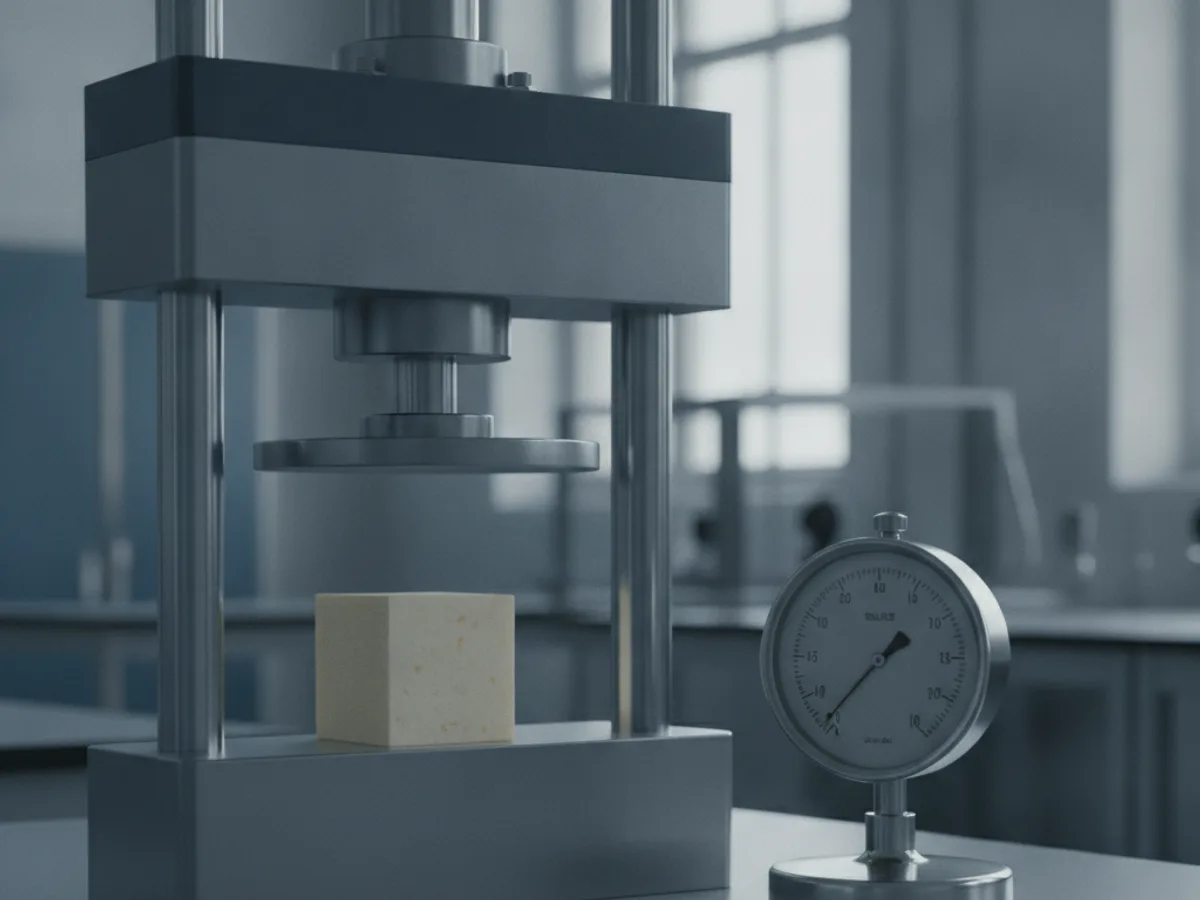
Quality control
Specific weight, hardness under compression and elasticity under tension are measured - against formulation and standard.
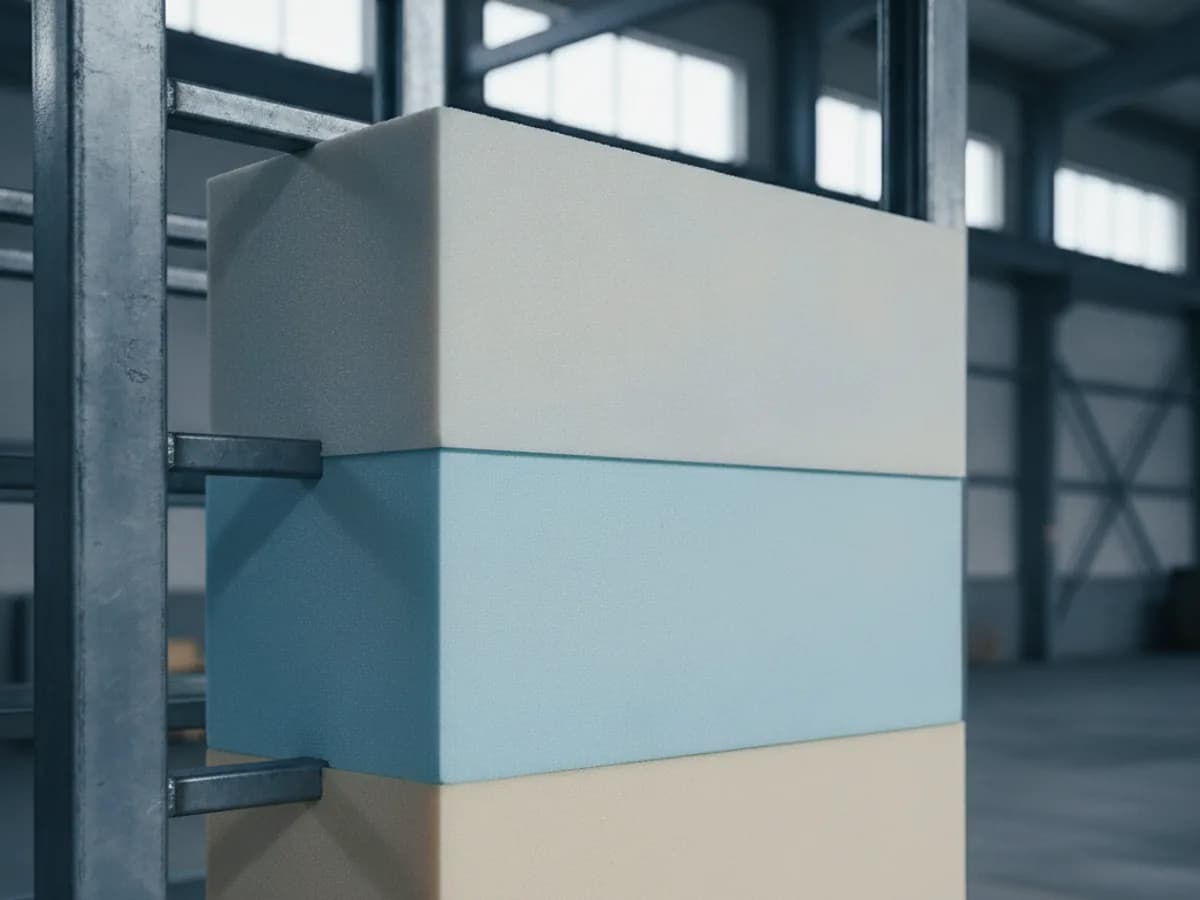
Finished PU foam
The block is ready for further processing or delivery - cutting to size, lamination or direct assembly.
Main raw materials and additives
- Polyol — base component
- TDI — isocyanate
- Catalyst (SO) — accelerates the reaction
- Additives — DEOA, silicones, stabilisers
- Blowing agents — water, amines
- Other — colourants, cleaning agents
Block processing
Once the block is done, the second half of the job begins - cutting, profiling and bonding to your drawing.
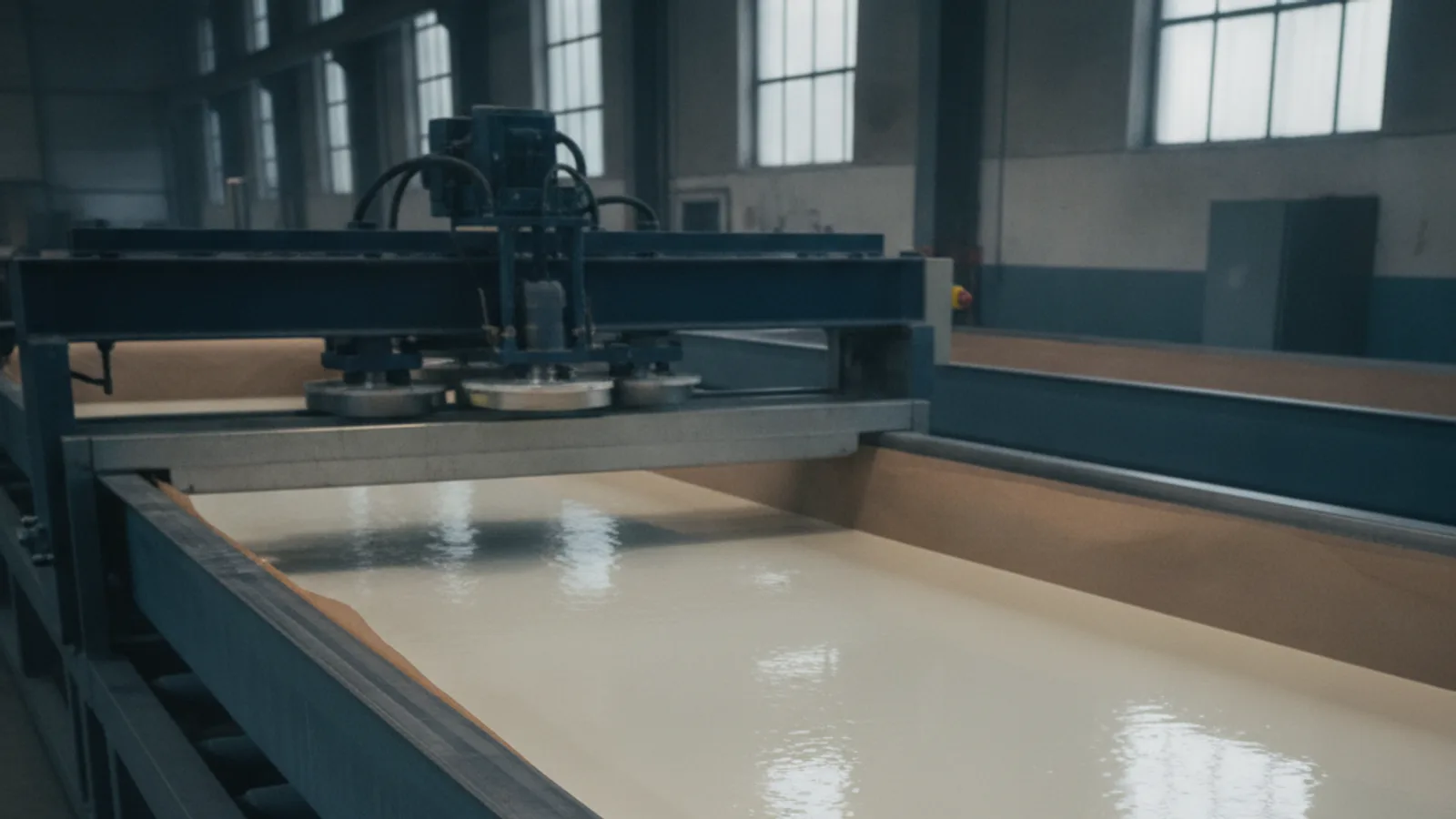
Foam production
The foundation: polyol and TDI are precisely dosed and mixed, and the exothermic reaction raises the block in the mould. Recipe control determines density, hardness and cell structure.
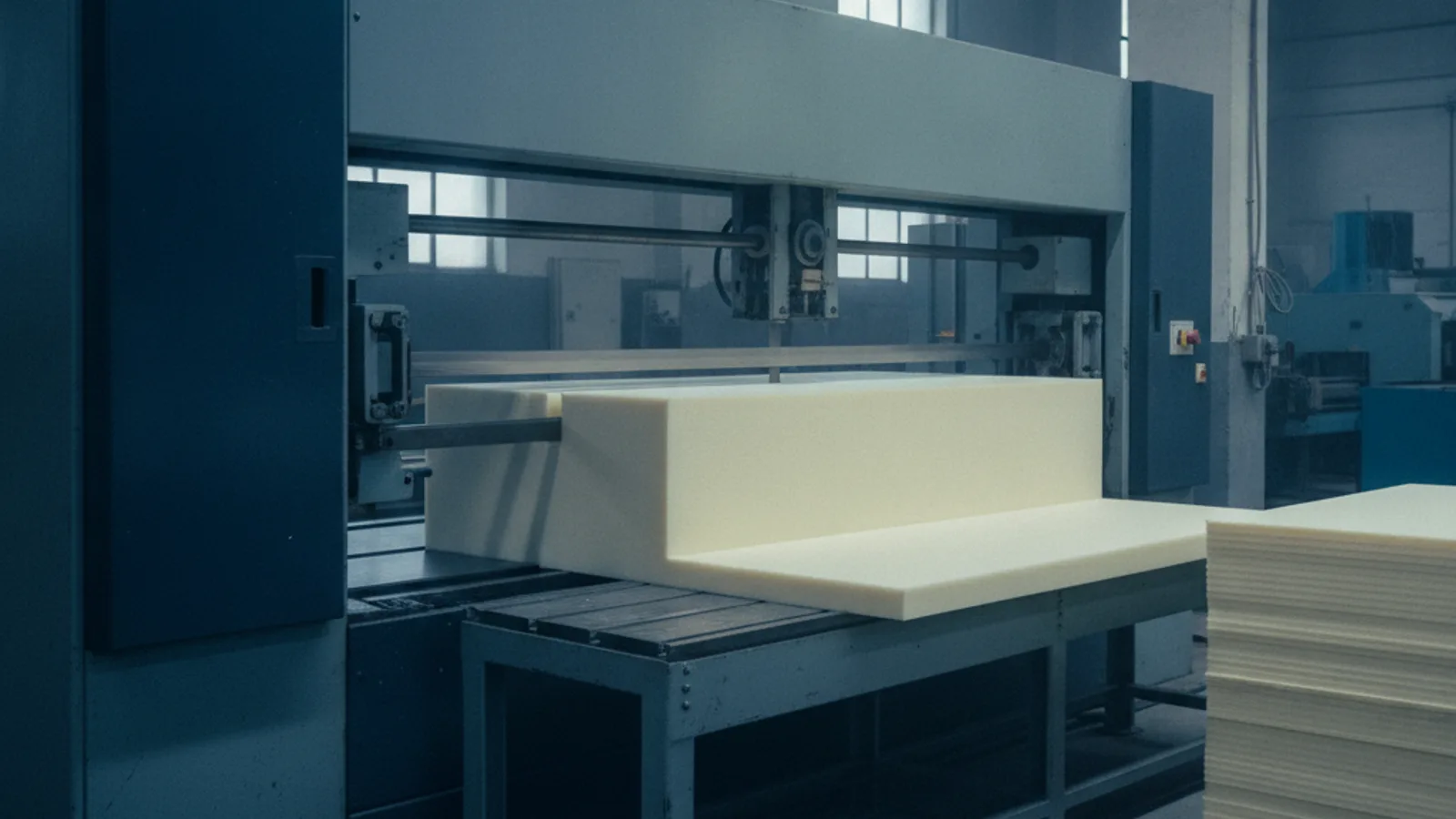
Horizontal & vertical cutting
Cured blocks are cut into sheets and strips of specified thickness. Precise guides keep tolerances stable along the whole block.
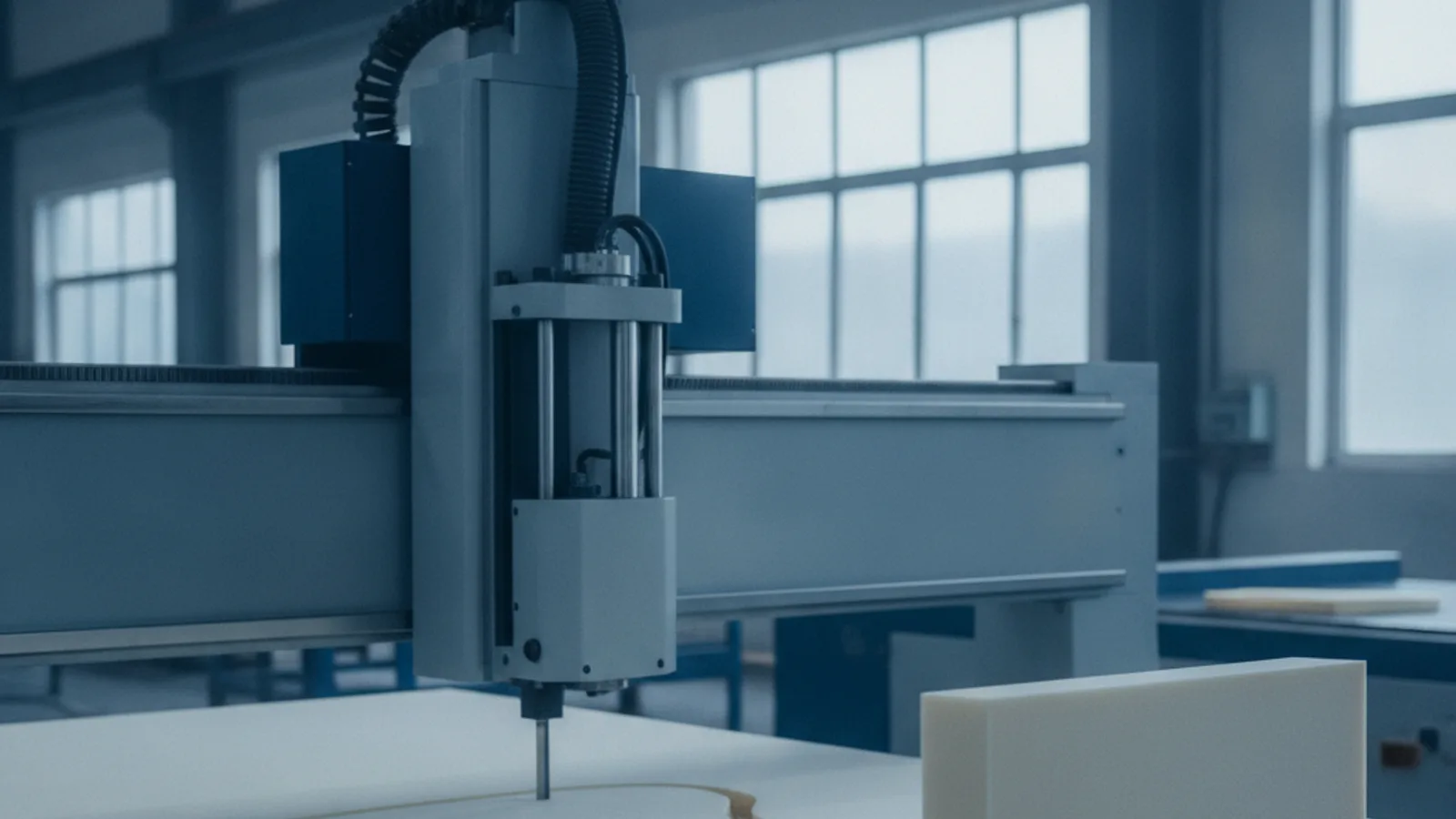
Contour cutting
From the customer's drawing or template we cut complex shapes - seats, backrests and profiles - with minimal waste.
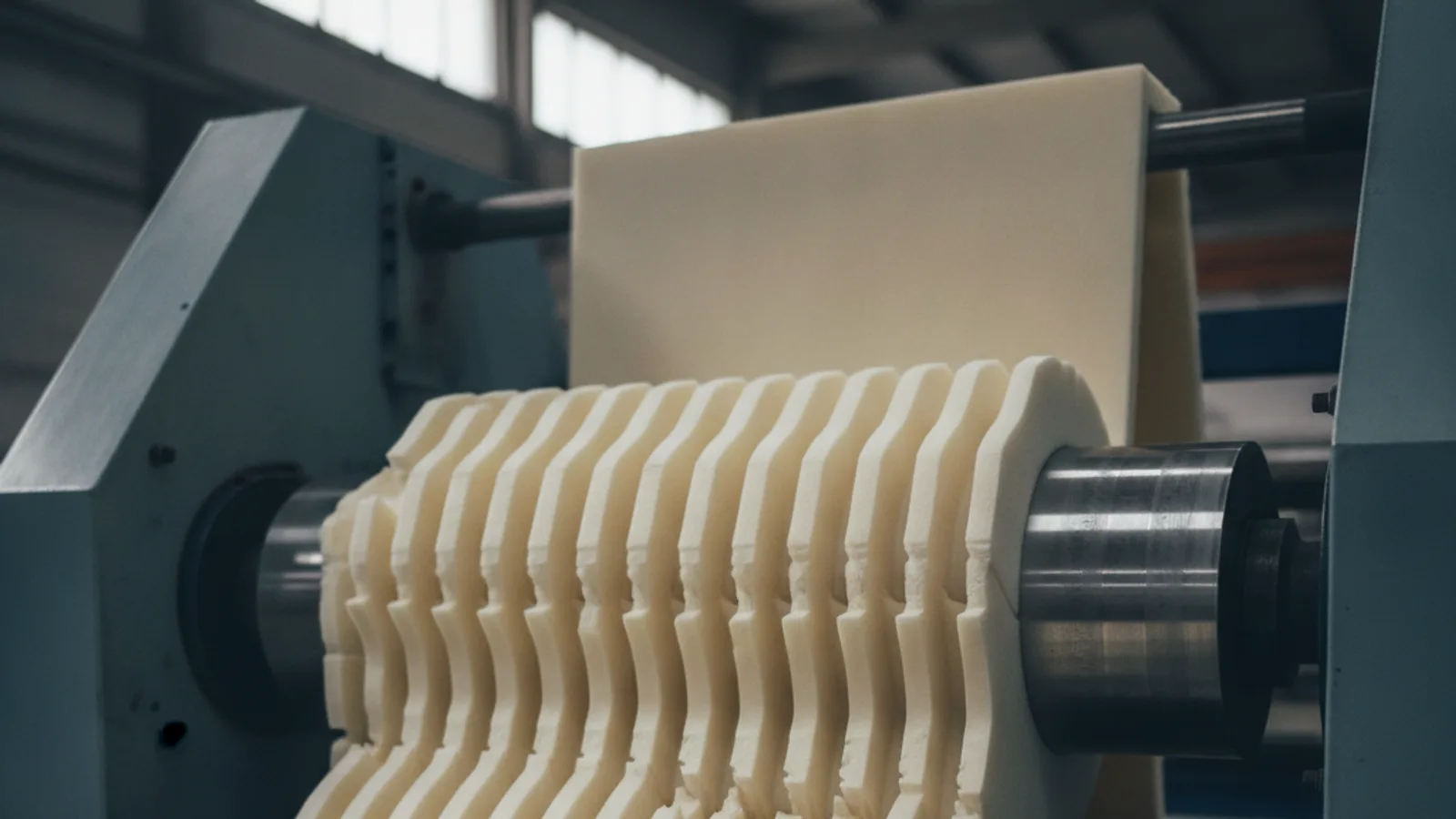
Profiling
Relief surfaces (waves, cones) for acoustic panels and bedding - two profiled parts from one sheet, zero waste.
Bonding
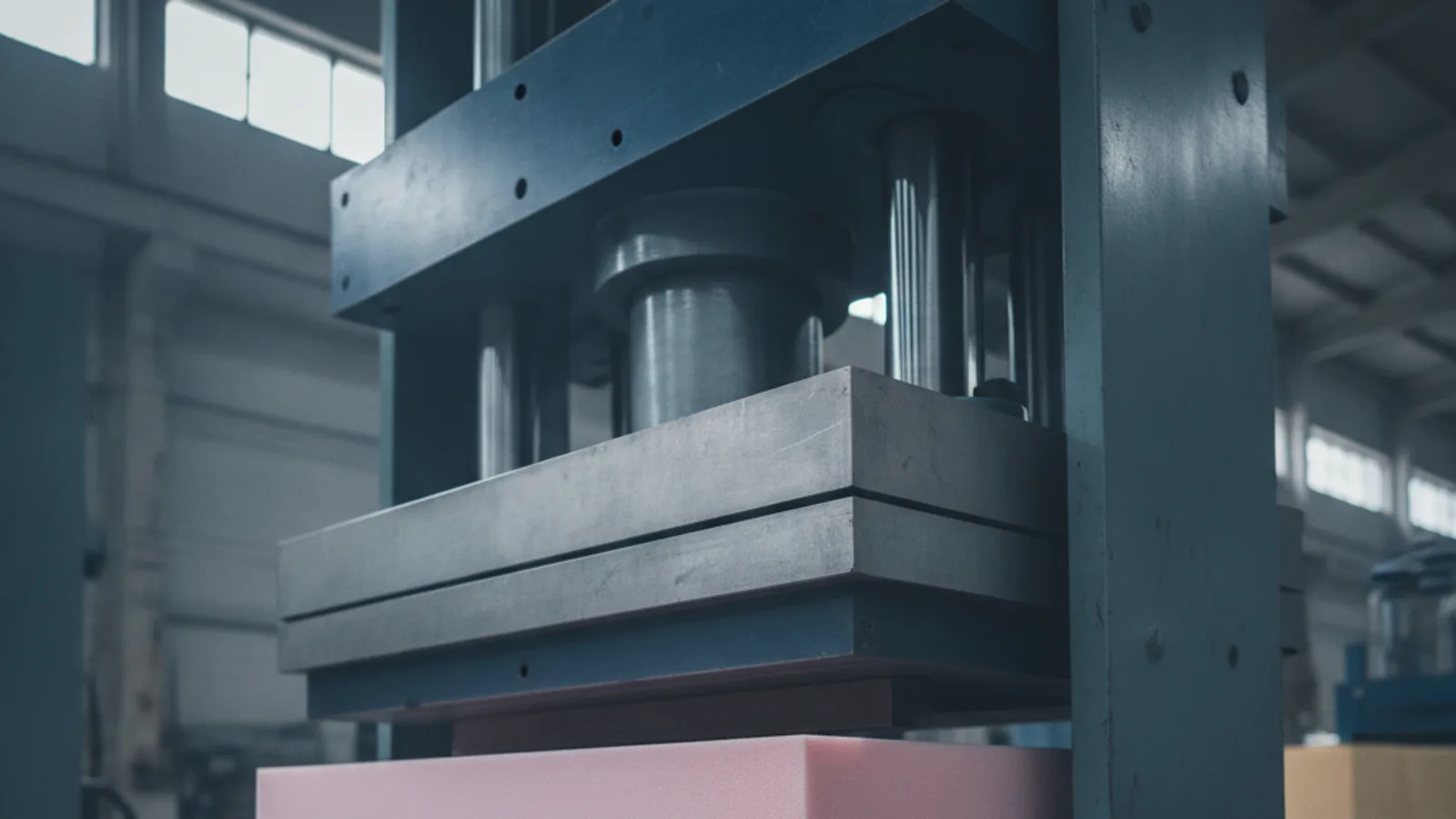
Joining foams of different densities and hardness into multi-layer elements - e.g. a firm core with a soft top layer for mattresses.
Lamination
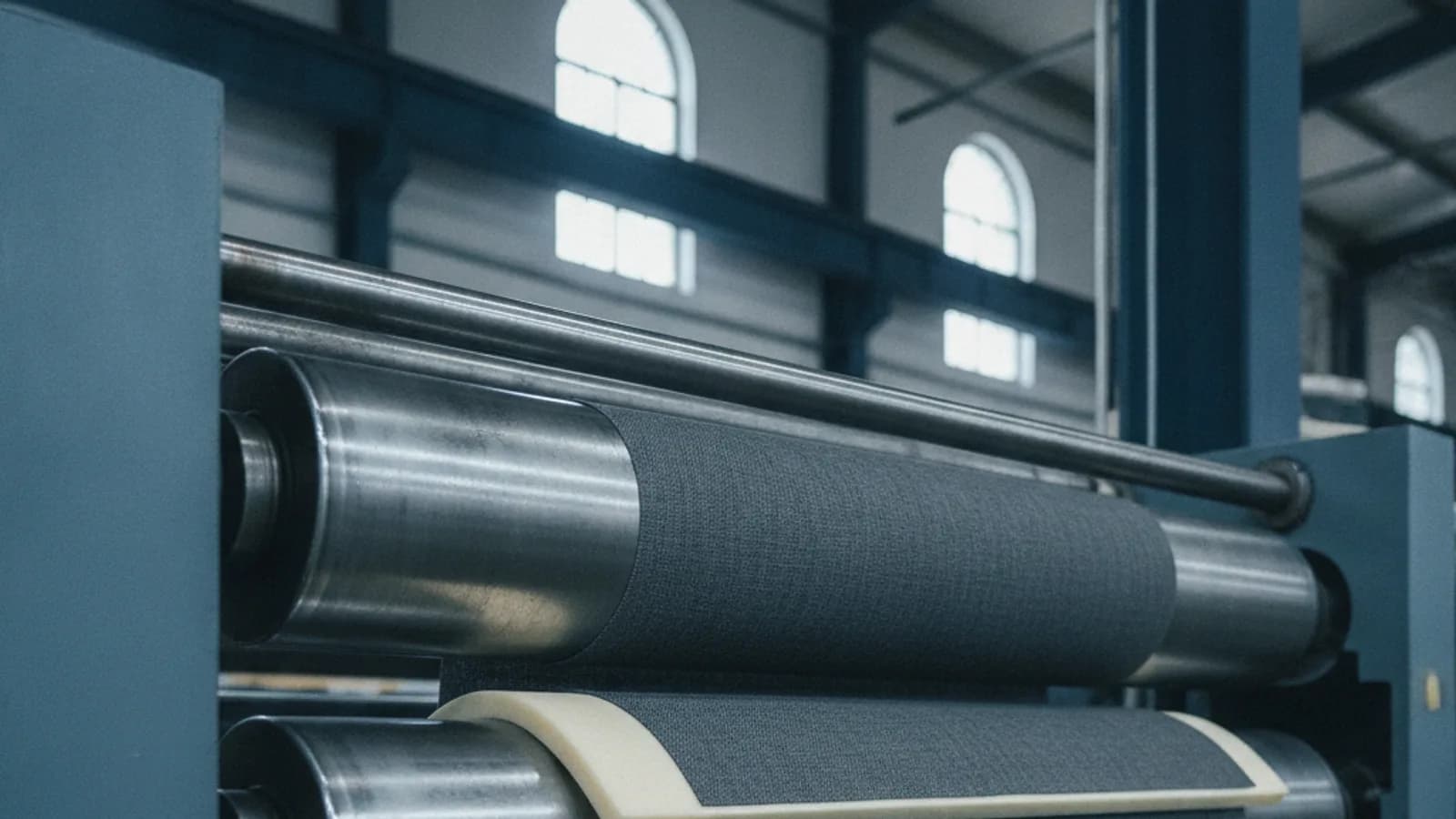
Laminating foam with textile, leather or foil for upholstery and furniture production - ready for direct assembly.