
HR foam vs. conventional foam - what actually differs
TechnicalJuly 14, 2026
HR is not ”a better conventional foam” but a different cell structure with a different compression curve. Where the difference pays off, and where it is unnecessary.
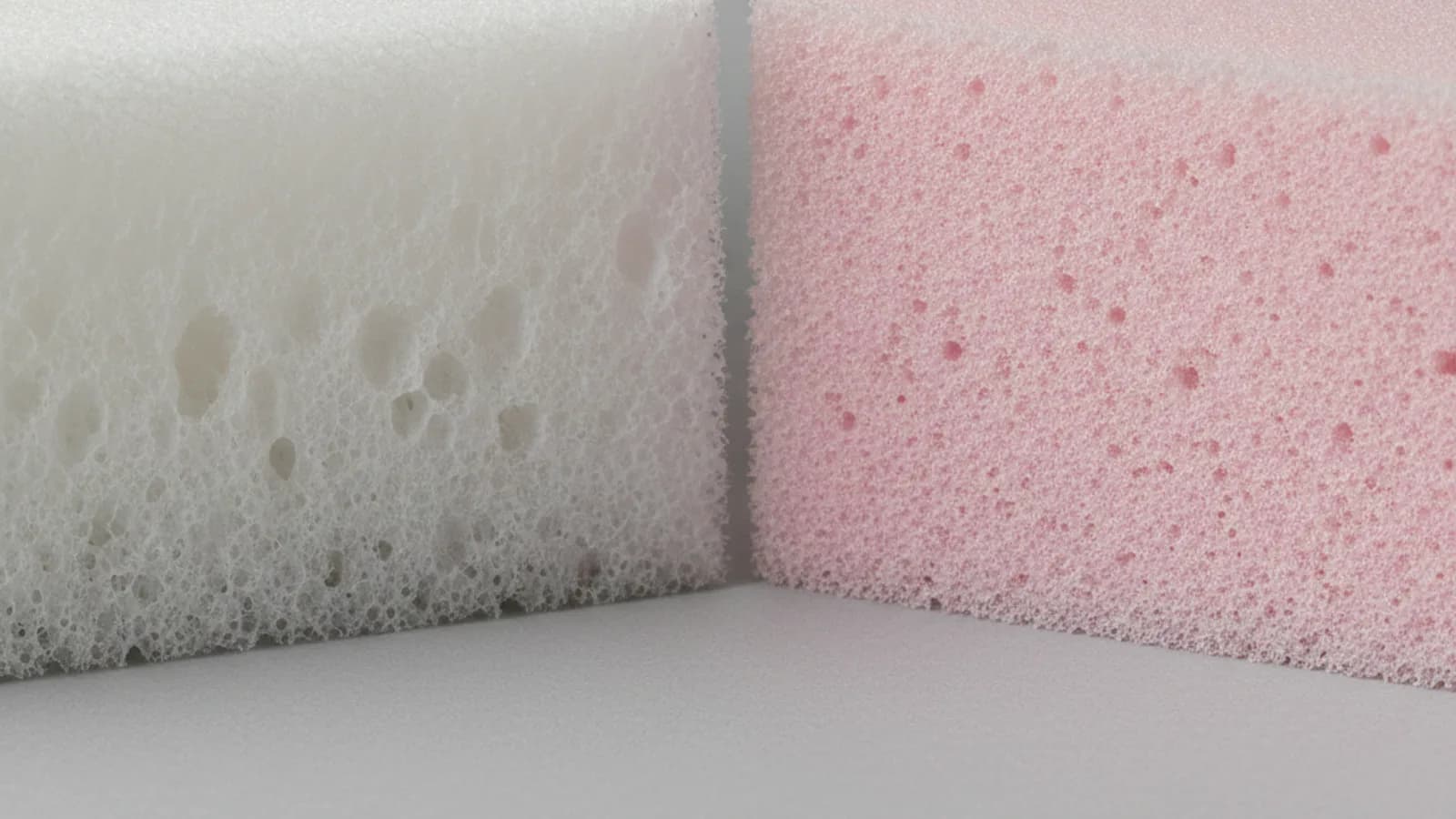
HR (High Resilience) foam is often presented as the premium variant of conventional foam. Technically it is a different chemistry and a different cell structure - with measurable consequences.
Cell structure
Conventional ether foam has regular, uniform cells. HR foam has a deliberately irregular structure with cells of varying sizes - so it responds softly to light loads and offers progressively more resistance under deeper compression.
Measurable differences
| Property | Conventional | HR |
|---|---|---|
| Resilience | 35–45% | over 50% |
| Support factor (SAG) | 1.8–2.2 | 2.4–3.0 |
| Compression curve | linear | progressive |
| Typical density | 16–40 kg/m³ | 35+ kg/m³ |
The support factor (ratio of hardness at 65% vs. 25% compression) is key for seating: a higher factor means a soft first touch with a firm "bottom" that doesn't let you feel the frame.
Where HR pays off
- Seats used daily for hours - durability and comfort justify the price.
- Mattress support layers - progressive support for the spine.
- Products with long warranties - HR's lower compression set preserves geometry.
Where conventional is the right choice
- Backrests, armrests, decorative elements - loads are small.
- Occasionally used furniture.
- Underlays and fillings without sustained load - HR adds nothing measurable there.
In our range you recognise HR grades by the HR prefix - see them in the catalogue or send an inquiry describing your product.
Have a specific case?
Send dimensions, quantity and intended use - we propose a foam grade and send a quote or sample.
Send an inquiry