
Cutting and dimensional tolerances - what is realistic to ask for
TechnicalJune 16, 2026
Foam is an elastic material and does not cut like sheet metal. Which tolerances are technically realistic, how they affect price, and how to specify them wisely.
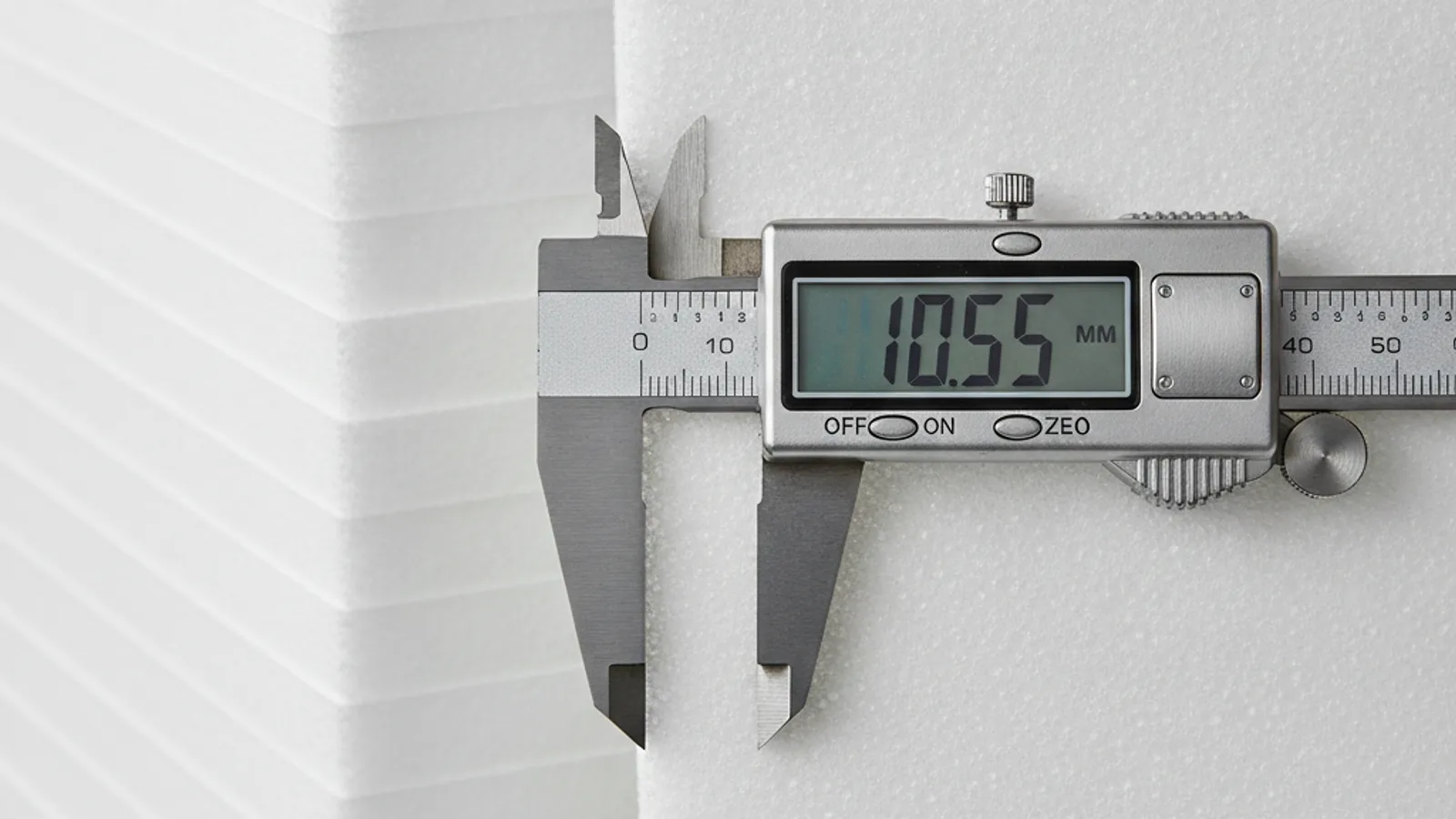
Inquiries often quote tolerances copied from machining drawings - ±0.1 mm on a foam part. On an elastic material such a tolerance is not even measurable, let alone producible. Here is what is.
Why foam has wider tolerances
- The material is elastic - it compresses and recovers during the cut itself.
- The blade deflects, especially on tall blocks.
- Softer, more resilient grades "run away" from the blade more than firm ones.
- Block temperature and age influence cutting behaviour.
Realistic ranges
| Operation | Typical tolerance |
|---|---|
| Sheets up to 50 mm thick | ±1.5 mm |
| Sheets over 50 mm | ±2 mm |
| Formats (length × width) | ±3 mm |
| Contour cutting | ±2–3 mm |
The values are indicative and depend on the grade - denser, firmer materials cut more precisely than soft low-density ones.
Tolerance has a price
Tighter tolerances mean slower cutting, more frequent measuring and more scrap - which directly raises the part price. Before asking for ±0.5 mm, check whether the function really requires it: in upholstery, gluing and cover assembly a 2 mm deviation usually disappears during fitting.
How to specify
- Mark which dimensions are functionally critical and which are free.
- Describe how the part is installed - we can often propose cheaper geometry.
- For parts seated in housings, send the housing drawing, not just the part.
You can attach the drawing and installation notes directly in the inquiry form - PDF, DWG or DXF.
Have a specific case?
Send dimensions, quantity and intended use - we propose a foam grade and send a quote or sample.
Send an inquiry