
Foam lamination and bonding - how multi-layer materials are made
TechnicalApril 21, 2026
Flame lamination, dispersion adhesives and hotmelt - three ways of joining foam to textile, film or other foam, and when each is used.
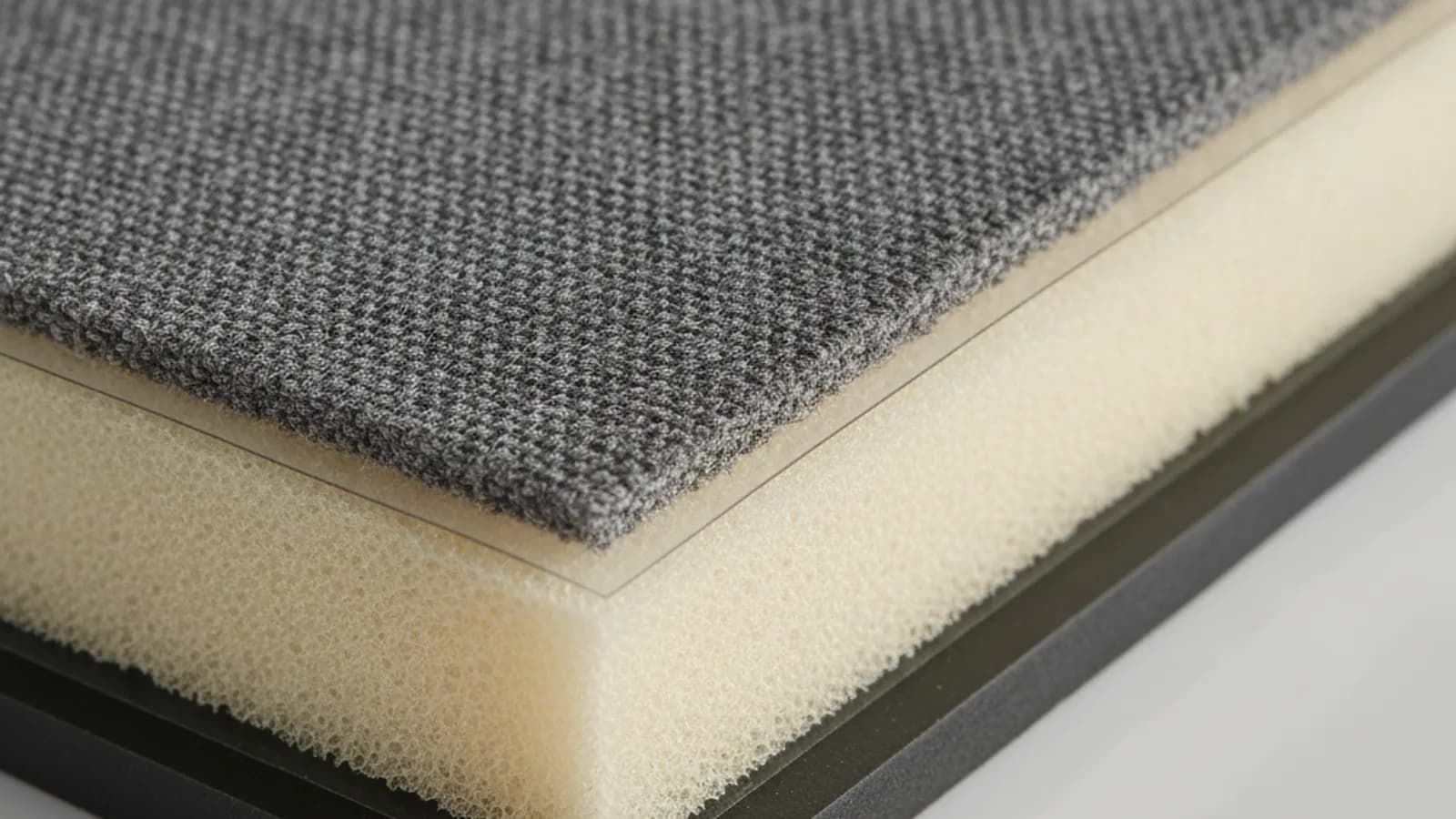
Few foam products are foam alone: an upholstered seat is textile-foam-backing, a mattress is a sandwich of layers, an acoustic panel is foam with fabric. The quality of the bond defines the quality of the product.
Flame lamination
The foam surface is briefly melted by a flame and immediately joined to a textile or film. No adhesive, the bond is instant and uniform across the whole width.
- Ester foams work best - their melt is tackier and gives a stronger bond.
- Typical uses: upholstery textiles, acoustic linings, technical laminates.
- Limitation: the process consumes about 0.2–0.5 mm of foam per pass, which must be allowed for in the thickness.
Adhesive bonding
- Dispersion PU adhesives - applied by spray or roller; a flexible, durable bond; needs drying time.
- Hotmelt - solvent-free thermoplastic adhesive, fast process; a somewhat stiffer bond.
- Adhesive webs - a heat-activated film; a clean process for precise laminates.
The choice depends on the materials, the flexibility the joint must retain, and end-product requirements (e.g. emissions in enclosed interiors).
What determines bond quality
- Flatness and cleanliness of the cut - cutting dust is the most common cause of a weak bond.
- Material compatibility: some films require pre-treatment.
- Correct pressure: too little fails to bond, too much presses adhesive into the cells and stiffens the bond line.
For multi-layer products, send an inquiry describing the layers - we will propose the joining technology and prepare a laminate sample.
Have a specific case?
Send dimensions, quantity and intended use - we propose a foam grade and send a quote or sample.
Send an inquiry