
Viscoelastic (memory) foam - when it makes sense and when it doesn't
TechnicalMay 5, 2026
Slow recovery and pressure distribution make memory foam excellent for lying on - and wrong for many other things. The physics behind the feel.
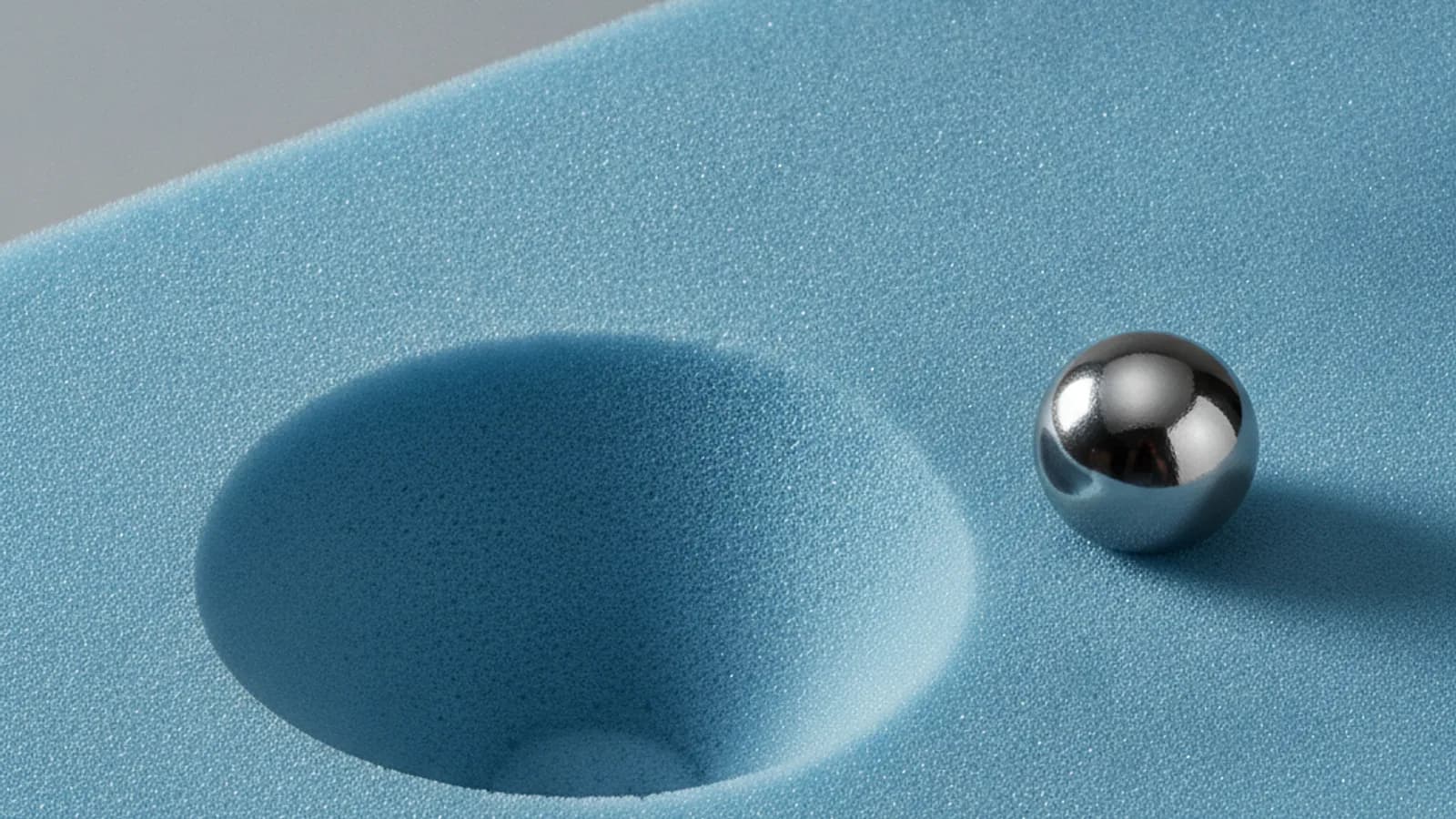
Viscoelastic foam is the most marketing-exploited material in the sleep industry. Behind the "space technology" is simple physics that says clearly where the material excels and where it is the wrong choice.
How it works
Viscoelastic foam has low resilience (below 15% - a ball dropped on it barely bounces) and slow recovery after compression. It is also temperature-dependent: it softens with body heat and "flows" around the shape pressing into it.
The result is a large contact area and even pressure distribution - no pressure peaks at the shoulder or hip.
Where it is an excellent choice
- Lying: mattress top layers, pillows, medical programmes for pressure-sore prevention.
- Elements that must absorb impacts or vibration without rebound.
- Ergonomic accessories: armrests, supports.
Where it is the wrong choice
- Seats that need response - slow recovery means a "sinking in" feel with every movement.
- Cold environments: at low temperatures the material stiffens considerably.
- Applications requiring ventilation: the denser structure breathes worse than HR foam.
- Dynamically loaded technical parts.
Combination is the standard
In practice memory foam almost never works alone: a typical mattress carries 4–8 cm of viscoelastic layer over an HR or conventional core that provides support. For such sandwiches we offer layer lamination and cutting to size - send an inquiry with your desired combination.
Have a specific case?
Send dimensions, quantity and intended use - we propose a foam grade and send a quote or sample.
Send an inquiry